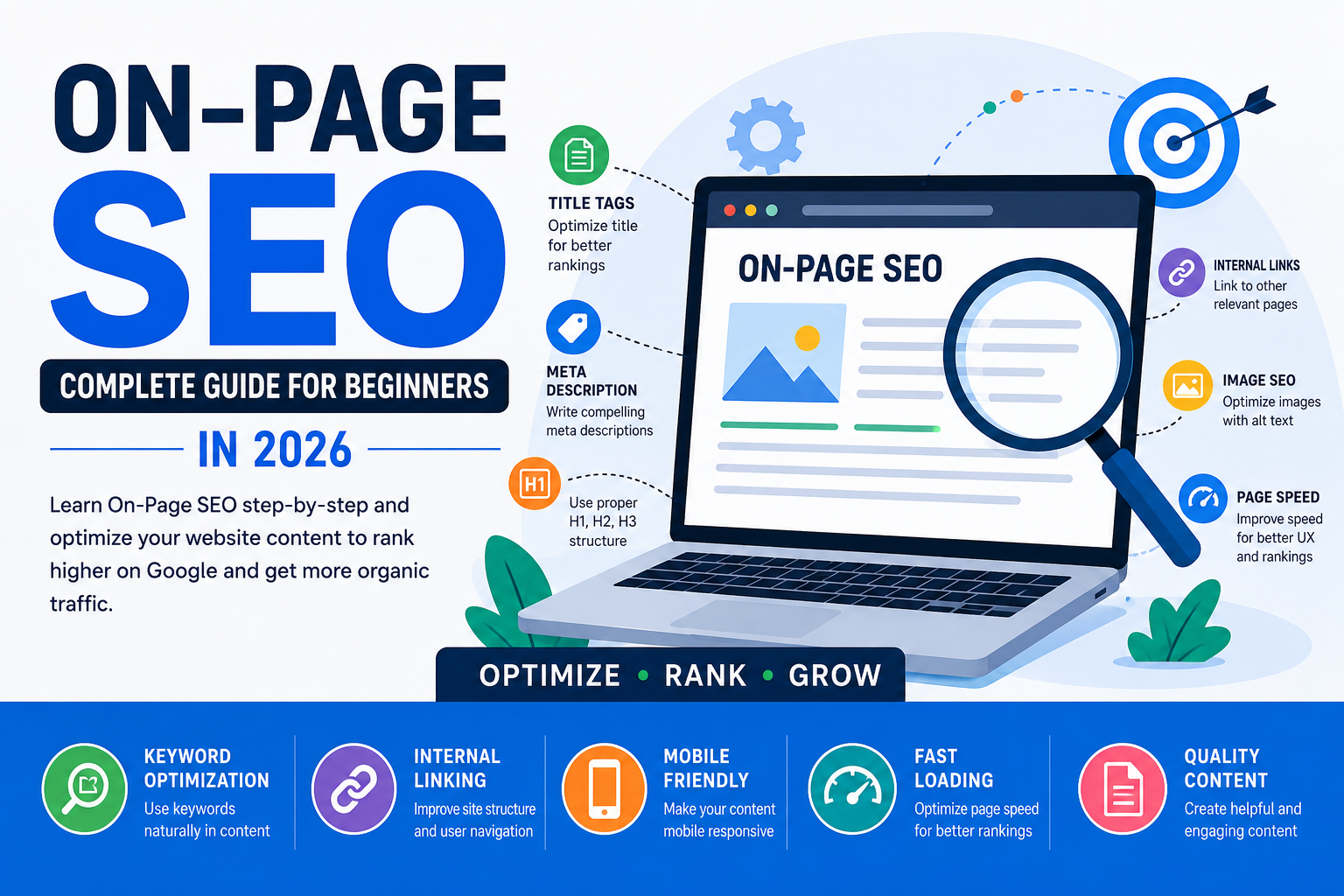
On-Page SEO is one of the most important parts of search engine optimization. It helps search engines understand your content and improves website rankings on Google. By optimizing titles, headings, keywords, images, and internal links, websites can increase visibility and organic traffic. In this beginner’s guide, you will learn everything about On-Page SEO in 2026.
What is On-Page SEO?
On-Page SEO refers to the process of optimizing webpage content and HTML elements to improve search engine rankings and user experience. It includes optimizing titles, meta descriptions, headings, keywords, URLs, images, and internal links.
On-Page SEO helps search engines understand webpage content more effectively and improves website visibility in search results.
Importance of On-Page SEO
On-Page SEO is important because it directly affects search engine rankings and user experience. Proper optimization helps websites rank higher on Google and attract targeted organic traffic.
It also improves content readability, website navigation, and engagement for users.
- Improves Google rankings
- Increases organic traffic
- Better user experience
- Higher click-through rates
- Improved website structure
- Better content readability
Title Tag Optimization
Title tags are one of the most important ranking factors in SEO. A title tag should contain the focus keyword naturally and clearly describe the webpage content.
SEO-friendly title tags improve click-through rates and help search engines understand the topic of the page.
Meta Description Optimization
A meta description is a short summary of a webpage that appears in Google search results. It should include the focus keyword and encourage users to click the webpage.
A well-written meta description improves visibility and increases organic traffic.
Proper Use of Headings
Headings help organize webpage content properly. H1 is used for the main title, while H2 and H3 headings are used for subtopics and sections.
Proper heading structure improves readability and helps search engines understand content hierarchy.
Keyword Placement Strategy
Keywords should be placed naturally in titles, headings, introduction paragraphs, image alt text, meta descriptions, and throughout the content.
Keyword stuffing should be avoided because it can negatively affect SEO rankings.
Internal Linking in SEO
Internal linking connects one webpage to another webpage within the same website. It helps users navigate the website easily and improves website structure for search engines.
Internal links also help distribute SEO authority across webpages.
Image Optimization Techniques
Image optimization improves website speed and search engine visibility. Images should be compressed properly and use descriptive file names and alt text.
Optimized images improve user experience and help webpages rank in Google Image Search.
URL Structure Best Practices
SEO-friendly URLs should be short, readable, and contain relevant keywords. Clean URLs improve user experience and make webpages easier for search engines to understand.
Good URL:
yourwebsite.com/on-page-seo-guide
Bad URL:
yourwebsite.com/page?id=12345
Mobile Friendly Content
Most internet users browse websites on mobile devices. Mobile-friendly websites provide better user experience and rank higher on Google search results.
Responsive design, readable text, and optimized images improve mobile SEO performance.
Page Speed Optimization
Page speed is an important ranking factor in SEO. Fast-loading webpages improve user experience and reduce bounce rates.
Optimizing images, reducing unnecessary scripts, and using caching techniques help improve website speed.
Common On-Page SEO Mistakes
- Keyword stuffing
- Duplicate content
- Missing meta descriptions
- Slow website speed
- Broken internal links
- Poor mobile optimization
- Missing image alt text
Conclusion
On-Page SEO plays a major role in improving website rankings and user experience. By optimizing content, headings, keywords, images, URLs, and internal links properly, websites can achieve better visibility, higher organic traffic, and long-term SEO growth.